Affordable marketing for accommodation facilities: 7 proven ways to get more bookings
Do you run a bed-and-breakfast, an apartment, or a small hotel and have a limited advertising budget? Affordable marketing in the hospitality industry consists of a set of simple steps you can implement on your own, without an agency or major expenses – and still effectively increase your number of bookings. The content you publish online works for you throughout the entire season: on Google, OTA platforms, social media, and in the results generated by AI assistants.
The Cheapest Ways to Promote Your Business – A Quick List
If you need a quick answer, here’s a list of the most cost-effective marketing strategies for a lodging property:
- Setting up and optimizing your Google Business Profile (Google Maps)
- Regularly managing your Facebook and Instagram accounts with a focus on bookings
- Using strategic hashtags and local tags on social media
- A simple website or landing page with online booking capabilities
- Ads on Facebook groups
- A blog or articles section optimized for local SEO (city/region)
- Email marketing to guests who have already stayed with you
- Actively soliciting online reviews and recommendations
- Publishing clear, specific information about your property that makes it easier for not only people but also search engines and AI assistants to understand your offer (e.g., descriptions of the location, amenities, and booking policies in simple, easy-to-understand language)
For most of these activities, you’ll only pay with your time – the tools are free or inexpensive, and you can see real results within a few months, especially if you combine several channels at once.
What is low-cost marketing in tourism?
Low-cost marketing in tourism is a way to promote an accommodation facility on a minimal budget, based primarily on time, consistency, and the use of free tools. It’s not about a lack of investment, but about the smart use of the channels you already have: Google Maps, booking platforms, social media, email, and guest reviews.
With well-organized efforts, the owner of a small property can increase the number of direct bookings by as much as several to several dozen percent during peak season. This is an example of a realistic figure based on the experience of small accommodations – actual results depend on location, season, the quality of your offering, and how consistently you carry out your efforts.
7 Ways to Market Your Accommodation on a Budget:
1. Google Maps Listing (Google Business Profile)
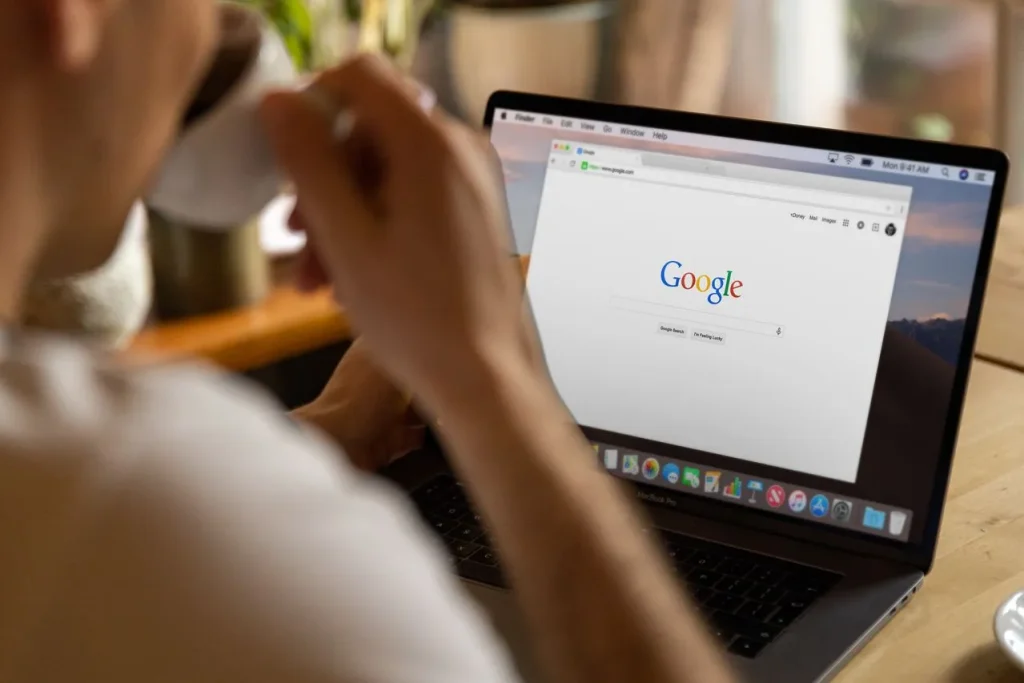
If you only have one marketing task to complete this month, create a Google Business Profile. It’s a free “mini-website” for your property, visible on Google Maps, featuring your address, photos, reviews, and a booking link.
Here’s how to do it step by step:
- Sign in to Google Maps with your Google account.
- Type your business’s address into the search bar and click “Add your business” on the left.
- You can also right-click on a specific location on the map and select “Add your business.”
- Fill in the property’s name, category (hotel, bed-and-breakfast, agritourism farm), address, and phone number.
- Add a link to your website or to an online booking form, such as one generated by BedBooking.
- Add 10–20 good photos: rooms, bathrooms, surroundings, and nearby attractions.
Note: You can create a listing for a hotel, motel, or agritourism property, but not for a single apartment – in that case, use the address of the office or guest service desk.
Why is this worth it?
- Guests are increasingly searching for accommodations directly on Google Maps, especially in specific locations (“accommodation in Świdnica,” “apartment in the city center”).
- A well-filled-out listing with reviews can generate anywhere from a few to several dozen inquiries per month, at no cost.
- An online booking link allows you to bypass part of the OTA commission – especially if you use a system like BedBooking to manage your calendar and sales channels.
Ultimately, it’s worth aiming for at least 10–20 reviews, and in competitive locations even 30+- with these numbers, your property really starts to stand out from other places in the area.
2. Social Media: Facebook and Instagram with a Focus on Bookings
Social media isn’t just about “pretty pictures”; it’s a cost-effective and highly efficient way to attract guests – if you manage your accounts consistently and with a specific goal in mind. With just one well-prepared post per week, you can maintain your property’s visibility and regularly remind both regular and potential guests about your business.
How to manage social media on a low budget:
- Set a simple plan: 1–2 posts per week on Facebook and Instagram during the off-season.
- During peak season (summer and winter breaks), you can temporarily increase the frequency to 3–4 posts per week, especially for last-minute deals.
- Use your phone – record a short video (Reel) giving a tour of the room, showing the view, the sauna, and the garden.
- Show a real guest experience: a morning on the terrace, breakfast, nearby attractions, and how to get there.
- Post current prices and availability as graphics; you can quickly create these using the free Canva tool.
- Encourage bookings through a specific link (e.g., to the BedBooking booking panel instead of the general website).
A simple, consistent profile can generate several to a dozen or so bookings per month, especially during last-minute and off-season periods, without any advertising budget – provided that you actually showcase your property and respond to guests’ messages.
3. Hashtags and Local SEO on Social Media
In 2026, hashtags still help with content discovery, but they are no longer the “main driver of reach.” Treat them as precise keywords that make it easier for people looking for accommodations in a specific location to find your posts.
Current guidelines for using hashtags (2026):
- Add 3–5 highly relevant hashtags per post, instead of the 20–30 used in the past.
- Focus on relevance to your content and location, rather than general, popular tags like #love or #instatravel.
- Treat hashtags as a search aid, not the main tool for increasing reach – reach is primarily determined by the quality of your content (photos, videos, descriptions) and audience engagement.business.
How to choose hashtags for an accommodation property:
- Always combine 1–2 general hashtags with 2–3 local or niche ones:
- General examples: #accommodation #vacation #apartment,
- local examples: #apartmentŚwidnica #guesthouseSudety #agritourismLowerSilesia.
- Write in Polish, using the correct diacritical marks: #agrotourism #roomsForRent #cottagesByTheLake – these are natural phrases your guests use.
- Only add hashtags if they actually fit the post; if you don’t have meaningful tags, it’s better not to add any at all than to post random ones.
Local SEO on social media:
- Always tag the post’s location (city/region) and mention it in the description, e.g., “overnight stay in Świdnica,” “weekend in the Sudetes,” “lakefront cottages in the Lubusz region.”
- Encourage guests to tag your profile and location in their photos – these are free “micro-ads” visible to their friends.
- Use natural phrases in your descriptions that you can later use on your website and in Google as well, e.g., “small family-run guesthouse in the mountains,” “apartment in the city center with parking.”
This approach to hashtags and local SEO provides a steady, low-cost stream of new views for your posts and profile, and every additional view is a potential message asking about availability. Specific results depend on the quality of your content and the competition in your area.
4. A simple website or landing page with online booking
OTA platforms (Booking.com, Airbnb, Slowhop, and other accommodation platforms) offer high visibility, but basing your entire business solely on them is risky. A simple website (even a one-page landing page) protects you in case of changes to the terms of service, commission increases, or account issues.
Why it’s worth having a website on a low budget:
- A one-time cost to create the website; afterward, only content updates are needed.
- You can optimize your property for local search terms (“accommodation in Świdnica,” “lakefront cottages in the Lubusz region”).
- You decide on promotions, packages, and content yourself.
- You can add a direct online booking module, e.g., from BedBooking – guests book directly with you, and the system automatically updates your calendar and OTA channels.
What must be included on such a website:
- A clear description of the property and its unique features (e.g., “a small family-run guesthouse in the Sudetes with a view of the mountains”).
- A “How to Book?” section with a simple online booking process.
- At least a dozen or so high-quality photos with descriptive captions (e.g., “double room with a balcony,” “mountain view from the terrace”).
- Guest reviews and a link to your profile on Booking.com / Google Maps.
- A “Contact” page with a map, address, and phone number.
A simple, well-written website can start generating traffic from Google within a few months, which will translate into additional bookings independent of OTA platforms – especially if you support it with a blog and links from other websites. Our trusted partners can help you create and develop such a website – Proadax and Business Architects, who specialize in designing and implementing web solutions for lodging facilities.

5. Blog and Content Optimized for Local SEO
A blog on an accommodation facility’s website is an affordable way to drive traffic from Google all year round, especially for search terms related to the local area, attractions, and leisure activities. This is content that “works” for you long after it’s written, including in search engines’ generative responses.
How to use a blog in practice:
- Publish one article per month – this is a realistic goal for the owner of a small property.
- Answer specific questions from visitors, such as:
- “What to do in Świdnica on the weekend”
- “activities for kids near [Your City]”
- “Workation in the Sudetes – where to work remotely?”
- Create titles like: “A Weekend in Świdnica – 7 Ideas for a Great Getaway,” “Vacation Cabins in the Mountains – What You Should Know Before Booking.”
- Add internal links to the homepage and the booking calendar (e.g., “Check availability at our guesthouse”).
If you don’t feel up to it, you can outsource individual SEO articles to a copywriter. A well-written piece of content will continue to generate value for seasons to come. It’s one of the most cost-effective ways to attract traffic, which you can later convert into direct bookings.
6. Email marketing to your guest database
Email marketing in the lodging industry is inexpensive, simple, and very effective because it’s based on relationships with people who already know you. All you need to do is start collecting consent to contact them and plan a few simple campaigns each year.
What you can send to guests:
- A thank-you note for their stay and an invitation to visit again.
- Holiday, New Year’s, and birthday greetings.
- Information about new features at the property (e.g., a new sauna, gazebo, or playground).
- “First-minute” and “last-minute” offers for regular guests.
- Lists of new attractions in the area and a calendar of local events.
With a well-managed email list, even a few simple mailings a year can result in a dozen or so – or even several dozen – guests returning, without any media budget. At the same time, remember to collect consent for contact in accordance with applicable regulations (GDPR) – the easiest way to do this is through the booking form and at check-in, with a brief informational clause.
A system like BedBooking makes it easy to collect guest contact information and plan campaigns – you don’t have to maintain spreadsheets manually; everything is in one place, ready to use for every email campaign.
7. Reviews, Recommendations, and a Mini-Loyalty Program
Strong reviews and recommendations are the foundation of cost-effective marketing in the tourism industry. For many guests, the number and quality of reviews on Booking.com, Google, or an OTA platform are more important than the price itself.
How to get more reviews:
- When guests check out, ask them directly to leave a review – most will be happy to do so if you ask.
- Hand them a small card with instructions: “You can leave a review here: [Google], [Booking]” – preferably along with a small gift.
- Include a link to leave a review in your post-stay email.
- Monitor reviews; if something comes up repeatedly (e.g., comments about breakfast), address it and communicate the changes in follow-up messages.
Mini-loyalty program:
- Offer small perks for repeat stays (late check-out, a better room, free parking).
- Communicate this in emails and on social media – without any technical bells and whistles, just keep it simple: “Become a regular guest, and your future stays will be cheaper and more comfortable.”
Combining reviews and loyalty creates a “snowball effect”: the more satisfied guests return, the less you spend on acquiring new ones. In practice, many small business owners notice that after a few seasons, repeat guests become one of the main sources of bookings.

Marketing Checklist for a Small Accommodation Property
Below is a simple checklist you can work through step by step:
Google Maps / Google Business Profile:
- Business profile set up
- Contact information and booking link filled out
- At least 10–20 photos
- At least 10 guest reviews (ideally 30+ in highly competitive locations)
Social media:
- Facebook – 1 post per week during the off-season, more during the high season
- Instagram – 1 post / 1 reel per week
- Local hashtags + location tag
- Link to online booking in bio
Website:
- A simple landing page with a description and photos
- “How to Book?” section with a clear step-by-step process
- Reviews and a link to the OTA / Google profile
- Contact form and map
Blog / content:
- List of 5–10 local topics
- At least 1 article per month
- Internal links to the homepage and booking calendar
Email marketing:
- Collecting consent for contact in accordance with the GDPR
- “Thank you for your stay” email template
- 2–4 campaigns per year (holidays, new arrivals, special offers)
Reviews and loyalty:
- Request for feedback upon checkout
- Card / QR code with links to reviews
- Simple loyalty program for regular guests
Mini case studies – examples of the results of low-cost marketing
These are examples of realistic scenarios for small properties (based on how local SEO, social media, and email marketing work in the tourism industry). They do not guarantee specific results, but they demonstrate typical outcomes when consistent efforts are made.
A rural tourism business with a Google Maps listing and reviews
After completing the listing, adding photos, and collecting 20 reviews over the course of the season, the number of calls from Google increased from a few per month to over a dozen, which translated into about 10–15 additional bookings per year – without any advertising budget.
Apartment with an active Instagram account
The owner posted twice a week: views, interiors, local attractions, and last-minute deals. After three months, the profile began generating about 5–10 inquiries per month via direct messages, of which 2–3 resulted in a booking – which translates to several dozen additional nights per year.
A small hotel with a newsletter
The hotel collected email consent and sent out 4 campaigns per year (New Year’s, spring, fall, winter). Each campaign generated several to a dozen or so return visits from regular guests, which – with an average stay of 2–3 nights – resulted in several dozen additional nights sold per year, without any advertising expenses.
How BedBooking Helps You Put Low-Cost Marketing into Practice
Low-cost marketing works best when it’s linked to a specific booking path – guests need a place to click to book their stay right here, right now.
BedBooking can support your marketing efforts in several key areas:
- Sharing an online booking link (widget/calendar) that you can embed in Google Maps, on your website, and on social media.
- Synchronizing your calendar with OTA platforms (Booking.com, Airbnb) – this helps you avoid overbooking, and your budget-friendly marketing campaigns always direct traffic to available dates.
- Quick occupancy reports that let you see whether your marketing efforts are actually increasing the number of bookings during peak and off-peak seasons.
This allows you to combine budget-friendly marketing with automation – once you’ve pasted the booking link and set up your calendar properly, it handles daily traffic from Google, social media, and your newsletter without the need to manually update availability.
FAQ
Focus on channels that are free or very inexpensive: a Google Maps listing, a simple website, regular social media posts, email marketing to repeat guests, and actively soliciting reviews. Combining these activities yields real results without a large budget, provided you carry them out consistently throughout the season.
Yes, a well-maintained listing with up-to-date information, photos, and reviews is often the first place a potential guest lands – especially for local searches. For small properties, it can account for a dozen or so additional bookings per year, though specific numbers depend on the competition in the area. Additionally, many guests first find a property on an OTA (e.g., Booking.com) and then search for it on Google to book directly and at a lower price – without a Google My Business listing and a website, you lose some of these opportunities for direct bookings.
Without an advertising budget, 1–2 meaningful posts per week are enough during the off-season: one about the property (interiors, amenities), and the other about the surrounding area or a current offer. During peak season, you can post more often if you have new content or last-minute deals. The most important things are consistency, a cohesive style, and a clear link to booking.
Yes, even a simple landing page gives you independence from OTAs, the ability to rank for local search terms, and a place to direct traffic from social media, emails, or Google My Business listings. The one-time cost of building the website usually pays for itself within a single season if you keep the content up to date and drive traffic to it.
Ask guests for reviews upon checkout, send a link after their stay, and make it easy for them to leave a review (via a note or QR code). Post reviews on your website, social media, and Google Business Profile – this sends a strong signal to new guests and to booking platform algorithms. The more authentic reviews you have, the easier it is to build trust without increasing your advertising budget. Additionally, during their stay, it’s a good idea to send a short text message asking if they’re enjoying their stay – this often allows you to identify a problem and address it immediately, before the guest returns home and leaves a negative review.